
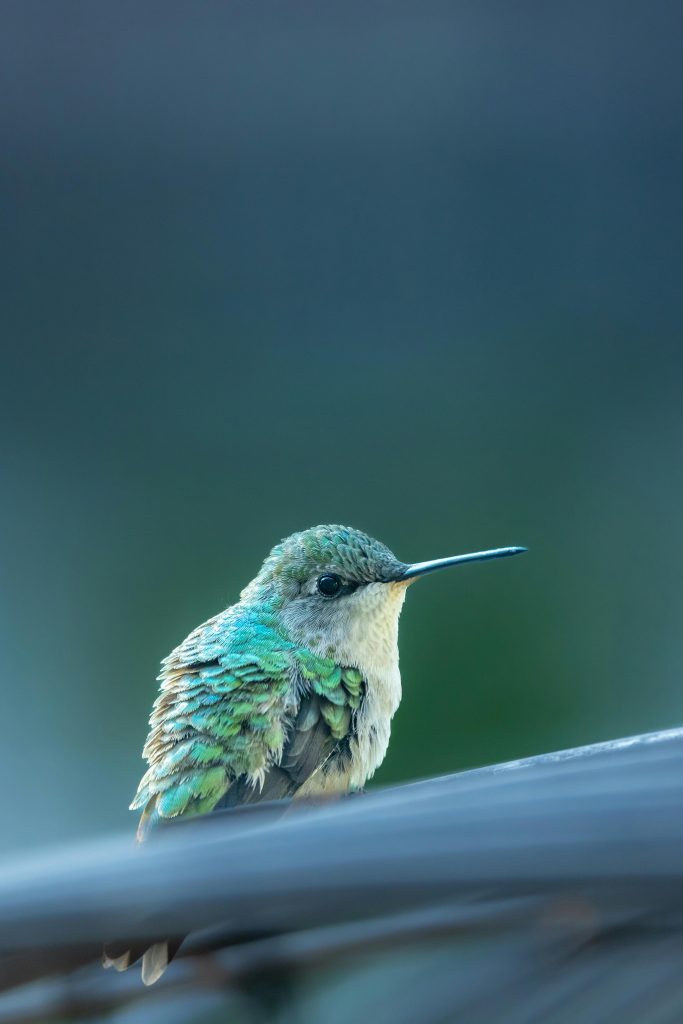
Watching hummingbirds in your yard is thrilling, but have you ever wondered how they grow up? From the moment a tiny egg hatches to the day a fledgling takes flight, baby hummingbirds undergo an incredible transformation. This article explores the stages of their early life, what they need to survive, and how you can appreciate their journey from a safe distance.
🌱 Stage 1: The Egg
Hummingbird eggs are astonishingly small — about the size of a jellybean or a coffee bean. The mother builds the nest using soft, fibrous materials like plant down, spider silk, and lichen, creating a snug, cushioned home.
Key facts about hummingbird eggs:
- They’re typically laid in clutches of 1–3.
- Incubation begins after the last egg is laid.
- Mothers keep the eggs warm almost constantly.
The incubation period generally lasts 14–18 days, depending on the species and weather.
🐣 Stage 2: The Hatchling
Once the eggs hatch, the young birds are featherless, blind, and utterly dependent on their mother. At this stage:
- Their eyes are closed for several days.
- Downy feathers start to appear within the first week.
- Their mothers feed them a rich diet of nectar and tiny insects.
Because their tiny bills can’t feed themselves yet, hummingbird hatchlings rely entirely on mom for nourishment.
🍃 Stage 3: Growing Feathers
Around 10–14 days, baby hummingbirds grow most of their feathers. They begin to look more like miniature versions of adult birds. Their wings start developing strength, which helps them prepare for:
- Wing flapping
- Balance
- Later flight practice
During this time, the mother continues to feed and protect them, sometimes shuttling back and forth hundreds of times a day.
🛫 Stage 4: Fledging
The most exciting moment in a baby hummingbird’s life is fledging — the first flight. This usually happens 18–22 days after hatching.
At fledging:
- Young birds leave the nest.
- Flight may appear awkward at first.
- They practice hovering and quick turns.
It’s a learning curve, and some fledglings return to low branches to rest, feed, and build confidence before flying farther.
🌼 How Mothers Care for Their Young
Hummingbird mothers are incredibly devoted:
- They regurgitate nectar and tiny insects to feed their young.
- They protect the nest from predators.
- They adjust feeding frequency based on weather and temperature.
After fledging, juveniles continue to follow their mothers for a short while, learning food sources and safe roosting spots.
👀 What You Can Do to Help
While it’s best to enjoy from a distance, you can support baby hummingbirds by:
- Keeping hummingbird feeders clean and filled with fresh nectar (properly mixed).
- Avoiding disturbance near known nesting areas.
- Planting nectar-rich flowers that bloom throughout the season.
Remember: never touch a hummingbird nest or eggs — human scent does not cause abandonment, but handling can disrupt critical early development.
Related Articles
- What to Do If You Find a Baby Hummingbird
- Do Hummingbirds Remember You?
- Do Hummingbirds Recognize Humans?
Tired of woodpeckers draining your feeder? Shop the For Hummingbirds Only spinning feeder — woodpecker-proof, bee-proof, and made for hummingbirds only.