
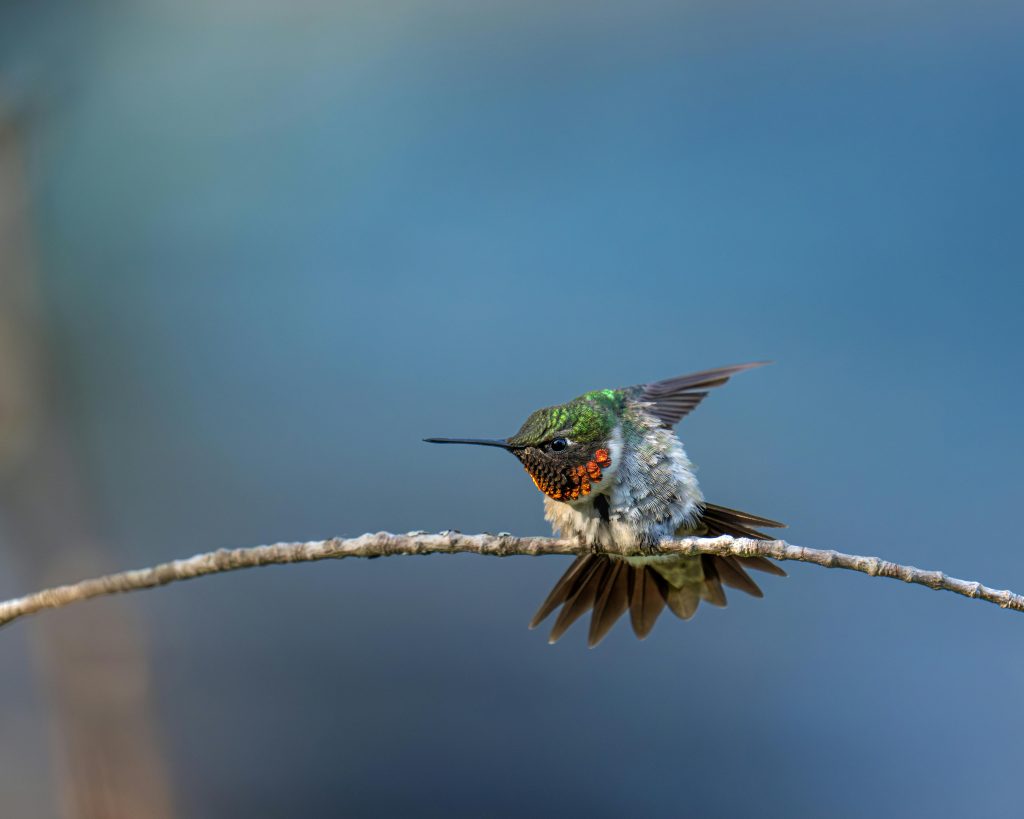
Every fall, the same myth makes the rounds. “Take your feeders down by Labor Day, or your hummingbirds won’t migrate!” Worried backyard birders rush to put their feeders away, convinced they’re doing the right thing.
The truth is the opposite. Leaving your feeders up in fall doesn’t keep hummingbirds from migrating — and in fact, it can save lives. Here’s what’s really going on, and when you should actually take them down.
The Migration Myth
Hummingbird migration is triggered by something far more powerful than your feeder: the angle of the sun and shortening daylight hours. As days get shorter, hormonal changes tell hummingbirds it’s time to bulk up and head south. No amount of free sugar water can override millions of years of biological wiring.
A well-fed hummingbird in late September isn’t a bird that’s forgotten to migrate. It’s a bird that’s fueling up for an incredibly demanding journey. Some species, like the Ruby-throated Hummingbird, fly nonstop across the Gulf of Mexico — a 500-mile crossing that requires every bit of fat reserve they can build.
Your feeder helps that journey. It doesn’t sabotage it.
Why Fall Feeders Actually Matter
Late summer and fall are some of the most important months to keep feeders out. Here’s why:
- Migrating birds need fuel. A passing hummingbird from farther north may be exhausted and hungry. Your feeder could be a critical refueling stop on a thousand-mile journey.
- Stragglers and late birds. Some hummingbirds — often young birds, sick birds, or unusual species — migrate later than the rest. A feeder available in October might be the difference between life and death for a bird that lingered too long.
- Cold snaps. An early cold front can wipe out flowers and insects almost overnight. Feeders provide reliable calories when natural food disappears.
- You might see something rare. Many of the most unusual hummingbird sightings — Rufous, Calliope, even Anna’s far from their usual range — happen at fall feeders.
When to Actually Take Them Down
The right time to take down your feeder depends on where you live, not the calendar.
- Northern U.S. and Canada: Keep feeders up at least two weeks after you’ve seen your last hummingbird. Some experts suggest keeping them out until consistent freezing temperatures arrive.
- Mid-Atlantic and Midwest: Mid-October to early November is typical, but again, watch for stragglers.
- Southern U.S.: Many areas have hummingbirds year-round. In Texas, the Gulf Coast, the desert Southwest, and parts of the Pacific Coast, feeders should stay up all winter.
- Pacific Northwest: Anna’s Hummingbirds overwinter here. Keep feeders up year-round and learn how to prevent them from freezing.
If you’re not sure about your area, check local bird groups or migration maps. The general rule: see a hummingbird, keep feeding it. They’ll leave when they’re ready.
Cold-Weather Feeder Care
If you’re in an area where temperatures dip near freezing while hummingbirds are still around, you’ll need to keep nectar from freezing. Options include:
- Bringing the feeder inside overnight and putting it back out at first light.
- Wrapping the feeder with insulating material and a hand warmer to slow freezing on cold mornings.
- Rotating two feeders, swapping the frozen one for a fresh one every few hours on cold days.
A frozen feeder helps no one, so a little effort on cold mornings goes a long way.
The Bottom Line
You can stop worrying. Leaving your feeder up does not trap hummingbirds in your yard, delay their migration, or harm them in any way. What it does is provide a reliable energy source during one of the most demanding periods of their life. So keep the nectar fresh, keep the feeder clean, and let them stay as long as they want. They’ll know when it’s time to go.