
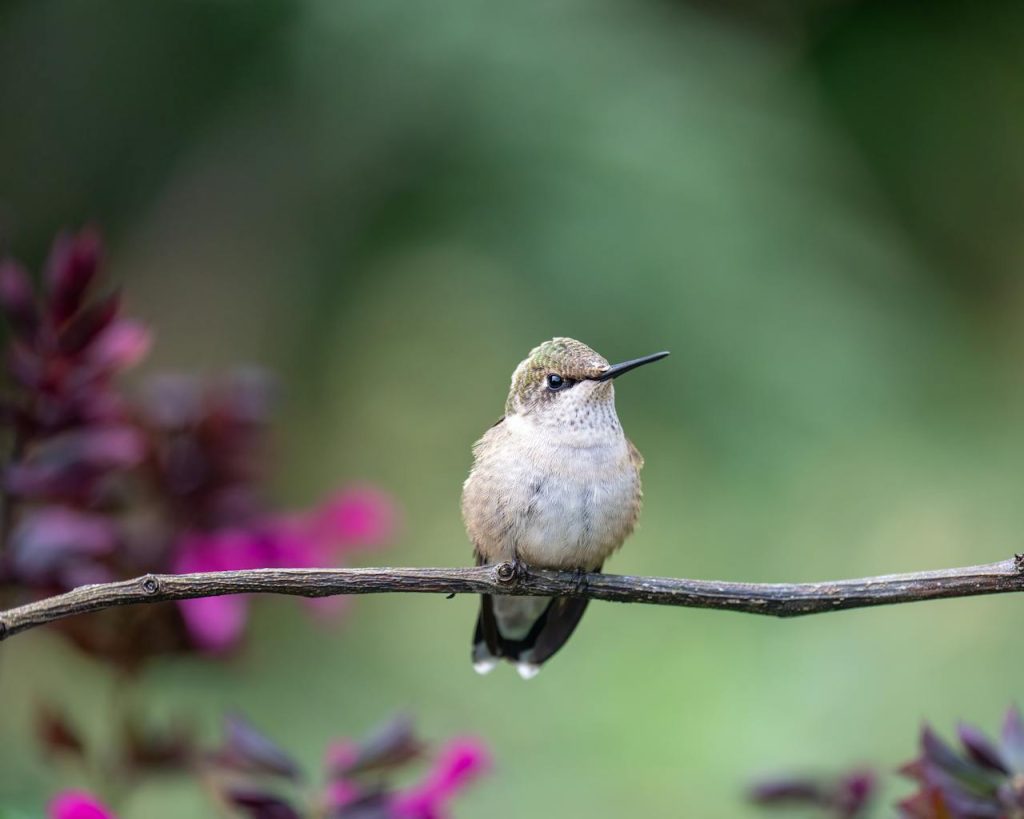
When most people plant for hummingbirds, they think flowers. Bee balm, salvia, fuchsia, trumpet vine — the usual nectar-rich stars. But there’s an entire layer of hummingbird habitat that often gets ignored, and adding it can transform your yard: trees.
Hummingbirds use trees for almost everything that isn’t eating. They nest in them, perch in them, hide from predators in them, and even feed from some of them. A yard with the right trees feels safer to hummingbirds, holds more of them, and keeps them around longer in the season.
Here’s what to plant — and why each tree earns its place.
Trees That Provide Nectar
Some trees produce flowers that hummingbirds actively feed from, often in spring before many garden plants have started blooming. These trees can be a critical food source for early-arriving migrants.
- Tulip Tree (Liriodendron tulipifera). Tall and stately, with cup-shaped flowers high in the canopy. Hummingbirds feed on them eagerly in late spring.
- Eastern Redbud (Cercis canadensis). A small ornamental with pink-purple blooms in early spring. Beautiful and useful — one of the first food sources of the season.
- Mimosa (Albizia julibrissin). Pink, feathery flowers that hummingbirds love. Plant carefully, as it can be invasive in some areas.
- Catalpa. Big, showy white flowers with purple markings. A magnet for hummingbirds and bumblebees alike.
- Black Locust. Fragrant white flower clusters in late spring that draw heavy hummingbird traffic.
Trees That Provide Shelter and Nesting
Even more important than nectar is structure. Hummingbirds need places to perch, rest, hide, and raise their young. Trees with the right kind of branches make all the difference.
- Oak species. Oaks support hundreds of insect species, which means more food for nesting hummingbirds. They also offer dense, layered branching that hides nests well.
- Maples. Excellent for nesting, with horizontal branches that hummingbirds favor.
- Pines and other conifers. Offer year-round shelter, especially valuable in colder regions.
- Birches and aspens. Hummingbirds use the catkins and the small insects they attract. Their flexible branches also serve as preferred perches.
- Dogwoods. Smaller, ornamental trees that fit even modest yards. Excellent perch and shelter trees, and their structure feels safe to hummingbirds.
Trees That Bring the Bugs
Hummingbirds eat far more insects than most people realize. Females feed protein-rich bugs to their chicks, and adults rely on them year-round. The best trees for hummingbirds aren’t always the ones with showy flowers — they’re the ones that host insects.
Native oaks, willows, cherries, and birches are insect powerhouses. A single oak can support hundreds of caterpillar species. To a hummingbird, that’s a buffet.
What to Avoid
Not every tree is a hummingbird ally. Heavily manicured ornamentals from other continents often produce showy flowers but support almost no insect life — they’re essentially dead zones for wildlife. Many invasive species (Bradford pear, tree of heaven) crowd out the native plants that actually feed birds.
When choosing trees for hummingbirds, native species almost always win. They co-evolved with the birds and insects in your area, and they produce far more food and shelter than imported alternatives.
Planning Your Yard’s Layers
The most hummingbird-friendly yards have three working layers: tall trees for shelter and perches, smaller trees and shrubs for nesting and structure, and flowers near the ground for nectar. Even a small yard can include all three, with careful choices.
If you only have room for one tree, choose a small native that flowers — a redbud, dogwood, or serviceberry. If you have room for several, build out the layers. Within a few seasons, you’ll notice more hummingbirds, more songbirds, and a yard that feels alive.
Trees are slow gifts. Plant one this year, and in five years, your hummingbirds will reward you.