
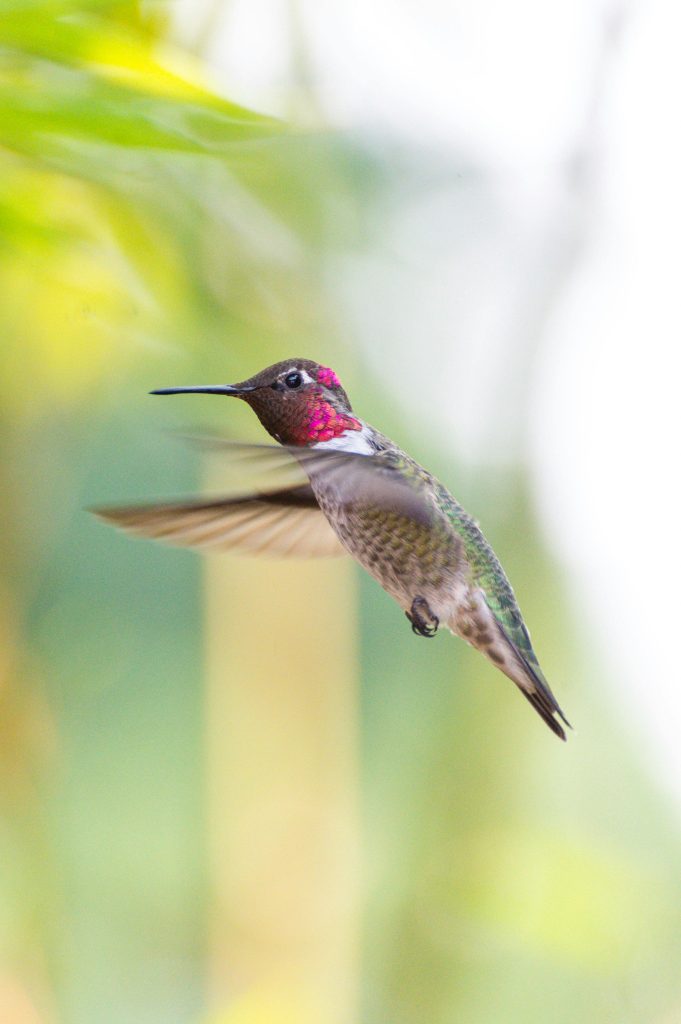
Seeing a baby hummingbird alone can be emotional — they’re tiny, fragile, and incredibly adorable. But acting too quickly can sometimes do more harm than good. This guide explains how to tell whether a baby hummingbird actually needs help and what you should (and should NOT) do.
🐥 First — Is It Really Alone?
Most of the time, baby hummingbirds are not abandoned. Hummingbird mothers spend a lot of time away from the nest gathering food and may only return every 20–30 minutes.
✔️ If the baby is in the nest
- Leave it alone.
- Observe from a distance.
- Do not touch or hover near the nest.
✔️ If the baby is out of the nest but looks healthy
It may be a fledgling learning to fly. This is normal.
Signs of a healthy fledgling:
- Feathers mostly developed
- Eyes open
- Attempts to flutter or hover
In this case, the mother is likely nearby and still caring for it.
🚨 When a Baby Hummingbird Does Need Help
Intervene only if:
- It is injured
- It is on the ground and too young to fly
- The nest is destroyed
- You have watched for several hours and the mother never returns
Signs of distress
- Eyes closed and unresponsive
- Bald or partially feathered outside the nest
- Obvious injury or predators nearby
🆘 What You Should Do
1️⃣ If the nest is intact
Gently place the baby back in the nest if it is clearly a nestling.
Myth-buster: Mother birds do NOT abandon babies due to human scent.
2️⃣ If the nest is gone or unreachable
Contact a licensed wildlife rehabilitator immediately.
Search: “Wildlife Rehab Near Me” or check your state’s wildlife department.
Keep the baby:
- Warm
- Quiet
- Safe from pets and children
Do not attempt to raise a hummingbird yourself — it’s illegal in most places and extremely difficult without the right diet and care.
❌ What NOT to Do
- ❌ Don’t feed sugar water or nectar unless instructed by a rehabilitator
- ❌ Don’t bring it inside “to take care of it”
- ❌ Don’t give water (risk of drowning)
- ❌ Don’t keep handling it
- ❌ Don’t post on Facebook groups first — call a professional
Hummingbirds require a precise balance of nectar and insects; improper feeding can be fatal.
💚 The Best Help Is Often Doing Less
The majority of found baby hummingbirds are simply learning to fly or waiting for mom. Observing from a respectful distance is usually the most helpful and safest option.