
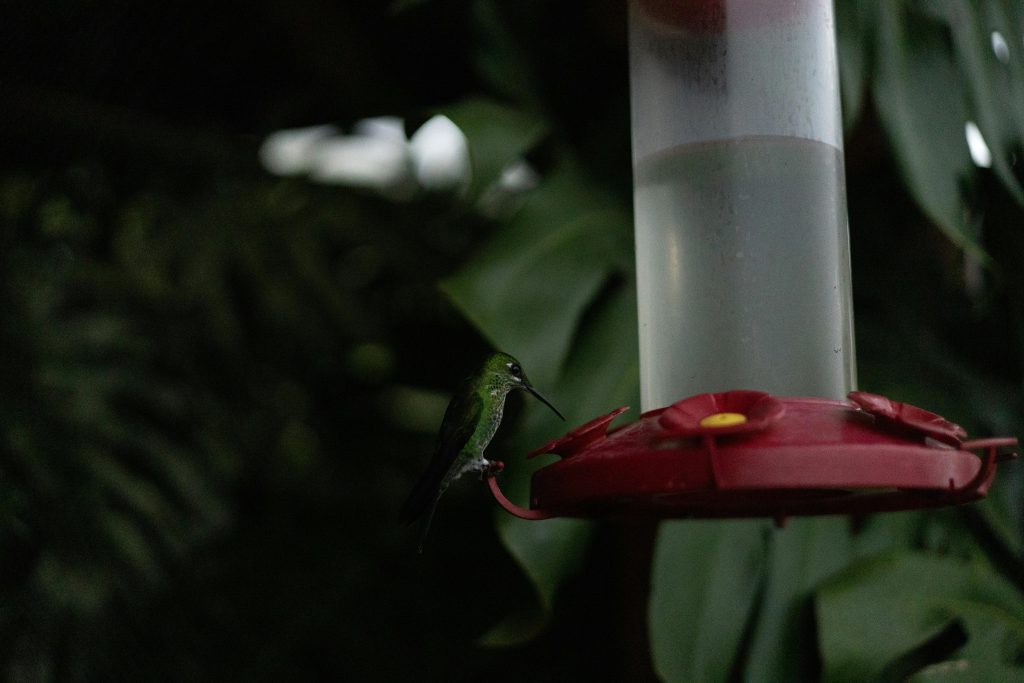
There are few things more frustrating than filling your feeder with fresh nectar, only to watch it get swarmed by bees and wasps within the hour. Once insects take over, hummingbirds often stay away entirely — and you’re left with a feeder that buzzes instead of hums.
The good news: you can win this battle without pesticides and without hurting the bees, wasps, or hummingbirds. Here are the methods that actually work.
Why bees and wasps love your feeder
Bees and wasps are after the exact same thing your hummingbirds are: sugar. In late summer especially, natural nectar sources dry up, and a feeder full of sugar water becomes an irresistible target. A few small details on most feeders make the problem worse — bright yellow accents, leaky ports, and shallow nectar that insects can reach.
Fix those, and you fix most of the problem.
1. Choose a feeder bees can’t reach
This is the single biggest factor. Hummingbirds have long tongues and bills, so they can reach nectar deep inside a feeder. Bees and wasps can’t. Saucer- or dish-style feeders hold the nectar well below the feeding port, putting it out of reach of insects while hummingbirds drink with ease.
Feeders where the nectar sits right at the port — or that drip — are basically an open invitation to bees.
2. Skip the yellow
Many feeders come with bright yellow “flower” accents around the ports. Yellow happens to be one of the most attractive colors to bees and wasps. Hummingbirds, on the other hand, are drawn to red. Choose a feeder with red feeding ports and no yellow, or carefully remove or paint over yellow parts. Some feeders include both a yellow and a red flower so you can choose — install the red one (it blends right into a red lid) and skip the yellow entirely.
3. Use bee guards
Bee guards are small mesh or cage-like screens that fit over the feeding ports. They let a hummingbird’s tongue through but block insects from reaching the nectar. Many quality feeders include them; if yours didn’t, they’re inexpensive to add.
4. Stop the leaks
A dripping feeder is a beacon for insects. Leaks usually come from:
- Overfilling (heat expands the air inside and pushes nectar out)
- A loose or cracked seal
- Hanging the feeder in direct, hot sun
Fill the feeder only about two-thirds full, check the seals, and move it to a shadier spot.
5. Move the feeder
Bees have good memories and will return to a known food source for days. If a feeder has been overrun, simply moving it a few feet can break the cycle — hummingbirds will find it again quickly, but many insects will keep returning to the old spot and eventually give up.
6. Keep it clean
Sticky residue and spilled nectar on the outside of the feeder attract insects even when the ports are protected. Wipe the feeder down each time you refill it. (Regular cleaning matters for your hummingbirds’ health, too.)
7. Give the bees their own spot
If you’d rather coexist, set out a shallow dish of sugar water in a sunny spot away from your hummingbird feeder. Bees often prefer the easier, more accessible source and leave the feeder alone.
8. Never use sprays, oils, or pesticides
It’s tempting to coat the feeder in cooking oil or petroleum jelly, or to spray insecticide nearby. Don’t. These substances can coat a hummingbird’s feathers and are toxic to them. Anything that harms insects near a feeder can harm hummingbirds, too. Stick to the physical methods above.
The easiest fix of all
If you’d rather not fight this every summer, the design of the feeder does most of the work. Our For Hummingbirds Only spinning feeder shuts bees out two ways: it keeps the nectar below the ports, and it comes with a red flower — pre-installed — that blends right into the red lid, so there’s no bee-attracting yellow on the feeder at all. Its weight-activated spin also keeps woodpeckers and large birds off. Hummingbirds feed in peace; everyone else gets shut out.
For more on protecting your feeder station naturally, see our guide to hummingbird-safe pest control for your garden, and the top questions asked about hummingbird feeders.
Related Articles
- Hummingbird-Safe Pest Control for Your Garden
- Top Questions Asked About Hummingbird Feeders
- Why Do Hummingbirds Fight at Feeders?
Tired of bees and woodpeckers draining your feeder? Shop the For Hummingbirds Only spinning feeder — bee-proof, woodpecker-proof, and made for hummingbirds only.