
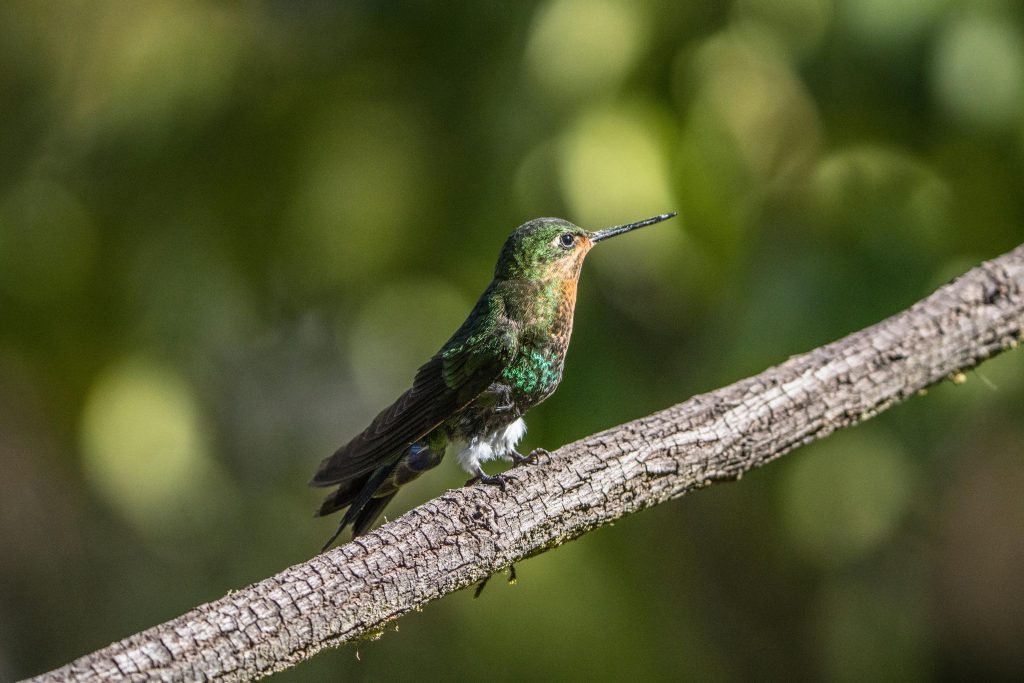
Most people assume every hummingbird vanishes south the moment the weather turns cold. For much of the country, that’s true — but not everywhere, and not for every species. A surprising number of hummingbirds spend the winter in the United States, and with a little help, you can host them through the coldest months.
Here’s who stays, where, and how you can help them survive.
Not every hummingbird migrates
Hummingbird migration is real and remarkable (we cover it in Migration Among the Hummingbirds), but “all hummingbirds leave for winter” is a myth. Some species are year-round residents in milder regions, and others have actually been expanding their winter range over recent decades.
Which species overwinter?
- Anna’s Hummingbird. The classic winter hummingbird of the Pacific Coast. Anna’s are year-round residents from the Pacific Northwest down through California and into the Southwest, toughing out frost and even snow.
- Rufous Hummingbird. Famous long-distance migrants, but a growing number now spend the winter along the Gulf Coast and Southeast, from Texas to Florida and up the Atlantic coast.
- Allen’s, Black-chinned, Buff-bellied, and others. Several species turn up at winter feeders across the southern U.S., especially along the Gulf.
If you live in a mild or southern region, keeping a feeder up in winter may attract birds you’d never see in summer.
Should you take your feeder down?
A common worry is that leaving a feeder up will “trap” hummingbirds and stop them from migrating. It won’t. Migration is triggered by day length and instinct, not by the availability of food. Leaving your feeder up simply gives late migrants and overwintering birds a reliable energy source. If anything, it can be a lifesaver for a straggler that needs fuel.
How to help winter hummingbirds survive
If you’re hosting hummingbirds through the cold, a few steps make a big difference:
- Keep nectar from freezing. This is the biggest winter challenge — frozen nectar is useless to a hungry bird. On freezing nights, bring the feeder in and put a fresh one out at dawn, or use insulation or an outdoor-safe heat source to keep it liquid.
- Keep it fresh and clean. Nectar spoils more slowly in the cold, but feeders still need regular cleaning.
- Offer shelter. Dense evergreens, shrubs, and brush piles give hummingbirds a windbreak and a safe place to roost.
- Provide a perch in the sun. A sunny, sheltered perch helps a cold bird warm up between feedings.
How they survive freezing nights
Overwintering hummingbirds have an incredible trick: torpor, a deep, hibernation-like state in which they drop their body temperature and heart rate dramatically to save energy on cold nights. We explore this in The Secret Night Life of Hummingbirds. By morning they “wake up,” warm themselves, and head straight for the nearest reliable feeder — which could be yours.
A welcome winter guest
Spotting a hummingbird at your feeder while snow falls is one of the great surprises of backyard birding. If you live somewhere mild, don’t pack the feeder away in fall — keep it up, keep it from freezing, and you may find you’ve become a winter refuge for these tiny survivors.
Related Articles
- Migration Among the Hummingbirds
- Why Hummingbirds Disappear Mid-Summer (And When They Come Back)
- The Secret Night Life of Hummingbirds
Hosting hummingbirds year-round? Shop the For Hummingbirds Only spinning feeder — easy to clean and built to keep pests away in every season.