
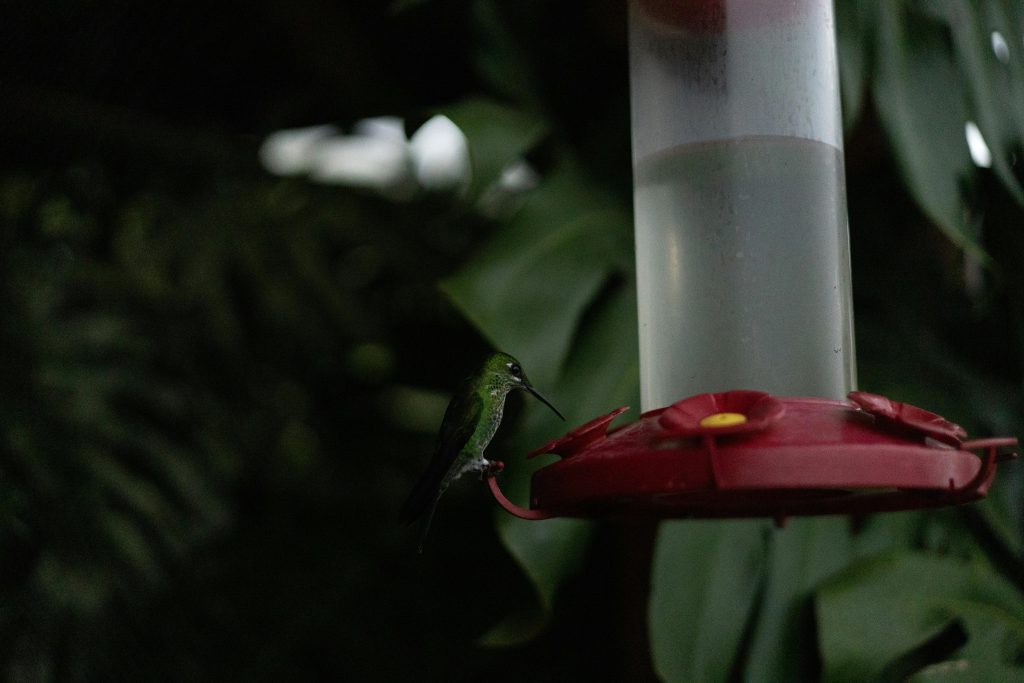
Filling a hummingbird feeder seems simple — just sugar and water, right? Mostly, yes. But a few small mistakes can turn a well-meaning feeder into something that actually harms the birds you’re trying to help. Here are the most common nectar recipe slip-ups, and how to fix them.
The correct recipe is always the same: one part plain white sugar to four parts water. That’s it. Anything beyond that simple ratio deserves a second look.
Using the Wrong Kind of Sugar
Plain white granulated cane sugar is the only safe choice. Hummingbirds’ bodies are built to process sucrose, and white sugar mimics the natural nectar found in flowers.
- Honey ferments quickly and grows fungus that can be deadly to hummingbirds.
- Brown sugar, raw sugar, and turbinado contain too much iron, which their tiny bodies can’t process.
- Artificial sweeteners and sugar substitutes have no calories — a hummingbird that drinks them will starve.
- Powdered sugar contains cornstarch and isn’t suitable.
Adding Red Dye
There is no nutritional reason to add red dye to nectar, and growing evidence suggests it may harm hummingbirds over time. Most feeders already have red parts to attract birds. The flowers in your yard handle the rest. Skip the dye entirely — clear nectar is the safest nectar.
Getting the Ratio Wrong
A nectar mix that’s too strong can dehydrate hummingbirds, and one that’s too weak doesn’t give them the calories they need. Stick to one part sugar to four parts water — measured, not eyeballed. Some people boil the water to dissolve the sugar fully and slow fermentation, then cool it completely before filling the feeder. Boiling is optional, but always let nectar reach room temperature before serving.
Letting Nectar Sit Too Long
Even a perfect recipe goes bad in the heat. Sugar water ferments and grows mold within a few days, especially when temperatures climb. Cloudy nectar, black spots inside the feeder, or a sour smell all mean it’s time to dump and refill.
- Above 90°F: change every 1–2 days.
- 70–90°F: change every 3–4 days.
- Below 70°F: change about once a week.
Storing Extra Nectar Improperly
Leftover nectar keeps in the refrigerator for up to two weeks in a sealed container. After that, it’s safer to make a fresh batch than to risk feeding spoiled liquid.
Hummingbirds reward consistency. A clean feeder with the right simple recipe — one part white sugar, four parts water, nothing else — is one of the best gifts you can give them. Skip the shortcuts and the additives, and you’ll have healthy, returning visitors all season long.
Related Articles
- Top Questions Asked About Hummingbird Feeders
- Hummingbird-Safe Pest Control for Your Garden
- Why Do Hummingbirds Fight at Feeders?
Tired of woodpeckers draining your feeder? Shop the For Hummingbirds Only spinning feeder — woodpecker-proof, bee-proof, and made for hummingbirds only.