
You can buy the best feeder and mix the perfect nectar, but if you hang it in the wrong spot, hummingbirds may never find it. Placement is one of the most overlooked parts of attracting hummingbirds — and one of the easiest to get right.
Here’s exactly where (and how high) to hang your feeder for the most visitors.
Make it easy to spot
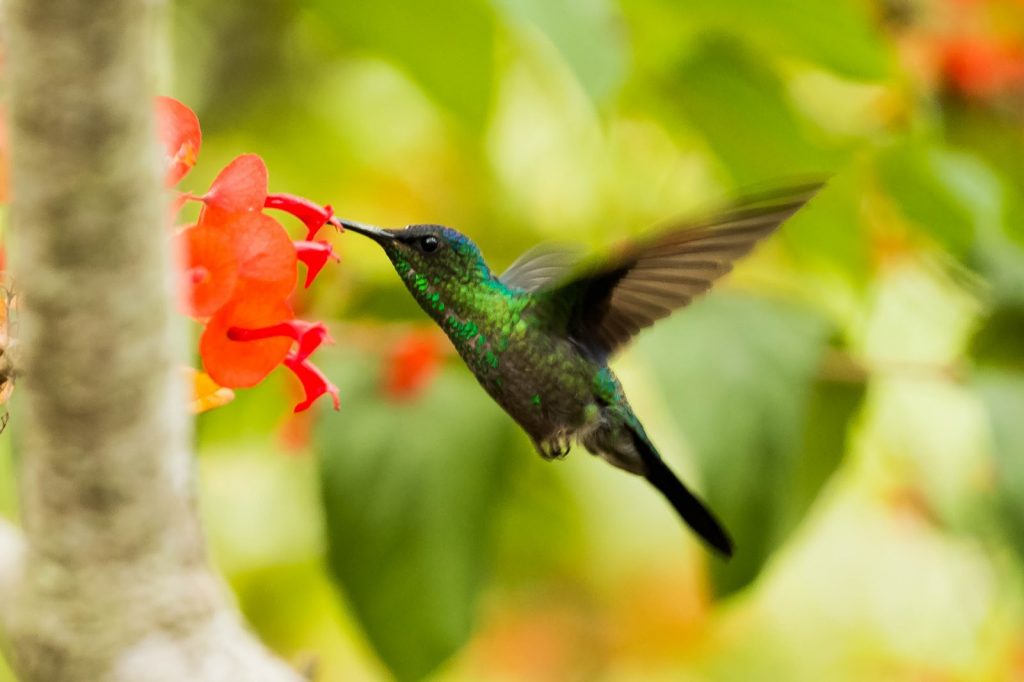
Hummingbirds find feeders by sight, and they’re especially drawn to the color red. Hang your feeder somewhere visible from the open air and from above, not tucked under a dense eave or buried in a bush. If you’re just starting out, placing the feeder near red or tubular flowers gives passing hummingbirds an extra reason to stop. (Need planting ideas? See our list of the top 10 flowers that attract hummingbirds naturally.)
The right height
Hang your feeder about 4 to 6 feet off the ground. That height keeps the nectar out of easy reach of most ground predators, makes the feeder easy for you to clean and refill, and puts it at a comfortable viewing level. Hummingbirds aren’t picky about exact height, so prioritize a spot that’s convenient for you to maintain — a feeder you can reach is a feeder you’ll actually keep clean.
Offer a little shade
In hot climates, partial shade is your friend. Nectar spoils faster in direct sun, and a shaded feeder stays fresh longer between changes. Dappled afternoon shade from a tree or the side of the house is ideal — just don’t bury the feeder so deep in foliage that birds can’t see it.
Provide a perch nearby
Hummingbirds spend up to 80% of their day resting. A nearby branch, trellis, or thin wire gives them a place to perch, survey their territory, and guard “their” feeder. A good perch within sight of the feeder will keep birds in your yard longer.
Mind your windows
Window collisions are a real danger. The safest approach is counterintuitive: hang feeders either more than 15 feet from windows, or closer than about 3 feet. Up close, a bird leaving the feeder can’t build up enough speed to be injured if it veers toward the glass. The danger zone is the middle distance, where birds can hit the window at full speed.
Spread feeders out to reduce fighting
Hummingbirds are famously territorial, and a single feeder can become a battleground that one bully bird defends against all comers. If you want to host more hummingbirds, put out multiple feeders and space them out of sight of one another — around corners or on different sides of the house. When the dominant bird can’t guard them all at once, everyone gets to eat. (We dig into this in why do hummingbirds fight at feeders.)
Keep it away from heavy insect and predator traffic
Avoid hanging directly over a deck rail where ants march, or right next to a wasp nest. And keep feeders out of easy pouncing range of outdoor cats — a feeder above open ground, away from low cover, is safest for your visitors.
Put it all together
The ideal spot is visible, shaded part of the day, 4–6 feet high, near flowers and a perch, a safe distance from glass, and easy for you to reach. Get the placement right and the rest of your hummingbird setup works far better.
For the complete picture, start with our guide on how to attract hummingbirds to your garden.
Related Articles
- How to Attract Hummingbirds to Your Garden
- Top 10 Flowers That Attract Hummingbirds Naturally
- Why Do Hummingbirds Fight at Feeders?
Want a feeder that keeps woodpeckers from taking over the best spot in your yard? Shop the For Hummingbirds Only spinning feeder.