
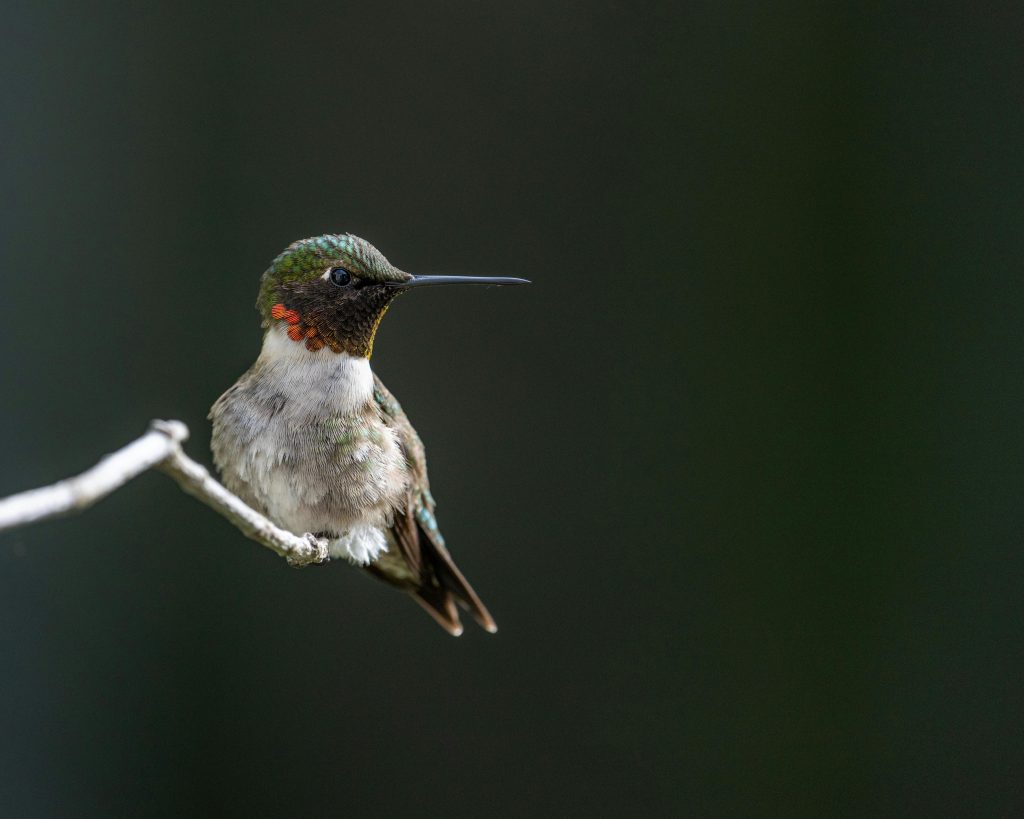
It’s an awful sound — a soft thud against the glass, followed by silence. Window strikes kill an estimated billion birds in North America every year, and hummingbirds are especially vulnerable. Their tiny size and high speed mean even a glancing collision can be fatal.
The good news: this is one of the most preventable threats hummingbirds face. A few simple changes to your home can dramatically reduce strikes, often without sacrificing your view.
Why Hummingbirds Hit Windows
Birds don’t see glass. What they see is a reflection — sky, trees, your garden — that looks like real, flyable space. To a hummingbird zipping toward what appears to be open sky, a window is invisible until it’s too late.
Two situations cause most strikes:
- Reflective glass. Bright, clear windows that mirror the outdoor scene are deadly. Birds fly straight into the reflection, thinking they’re heading into open habitat.
- Pass-through views. When a bird sees through your house — say, a window on one side of the room aligned with another on the opposite side — they think there’s a clear flight path.
Hummingbirds also chase rivals during territorial disputes, and a fast pursuit can end in a window strike when neither bird is looking where they’re going.
Quick, Low-Cost Solutions
You don’t need to renovate your home. The most effective fixes are surprisingly simple.
- Window decals or stickers. Place them on the outside of the glass, no more than 2 inches apart. The 2-inch rule matters — hummingbirds will fly through bigger gaps. UV-reflective decals work too, since hummingbirds can see UV light.
- External screens. Bug screens, sun shades, or even sheer netting on the outside of windows soften any impact and reduce reflections.
- Tempera paint or soap markers. Draw patterns directly on the glass. They wash off in the next rain, so reapply as needed.
- Cord curtains. Strands of paracord or fishing line hanging vertically every 4 inches outside the window are nearly invisible from inside but very visible to birds.
- Move feeders closer to windows, not farther. Counterintuitive, but it works. A feeder within 3 feet of a window means a bird can’t build up enough speed to be injured if it does strike.
Solutions That Don’t Work as Well
Some popular fixes are less effective than people think.
- A single hawk silhouette on a window doesn’t help much — birds just fly around it.
- Stickers on the inside of the glass are far less effective than outside, because the reflection is on the outer surface.
- “Bird-safe” once-and-done sprays often wear off and need frequent reapplication to actually work.
What to Do If a Hummingbird Hits Your Window
If you find a hummingbird stunned but breathing, there’s a real chance to save it. Place it gently in a small box with a soft cloth, somewhere quiet, dark, and away from pets. Don’t try to feed or water it — most just need 30 to 60 minutes to recover from the shock. Take the box outside, open it, and many will fly off.
If the bird is clearly injured (drooping wing, bleeding, unable to grip with its feet), contact a wildlife rehabilitator. Hummingbirds need specialized care quickly, and well-meaning home treatment can do more harm than good.
A Yard-Wide Approach
The best protection is to think about your home as a whole. Walk around your house and look at each window from outside on a sunny day. Which ones reflect the most sky or trees? Those are your priorities. Address the worst three or four windows first, and you’ll prevent the majority of strikes.
Hummingbirds have enough working against them — predators, weather, exhausting migrations. The least we can do is make sure our homes aren’t another hazard. A few decals or a strand of cord is a small investment that can save lives for years.