
Walk down the bird-supply aisle or scroll an online store and you’ll find dozens of hummingbird feeders in every shape and price. So which one is actually best? The truth is that the “best” feeder isn’t about being the fanciest or the cheapest — it’s about a handful of features that determine whether you’ll enjoy it for years or toss it by midsummer.
Here’s what to look for.
1. Easy to clean
This is the most important feature, full stop. A feeder you can’t clean easily is a feeder that will grow mold and harm your hummingbirds — because you’ll put off the chore. Look for a feeder that fully disassembles, with wide openings and few hidden crevices. If you can’t get a brush into every part, keep looking. (See how to clean a hummingbird feeder for why this matters so much.)
2. Saucer vs. bottle design
There are two main styles:
- Bottle (inverted) feeders hold more nectar but are prone to leaking and dripping, especially in heat — which attracts ants and bees.
- Saucer (dish) feeders hold the nectar below the ports. They leak less, resist insects better, and are usually easier to clean.
For most backyards, a well-made saucer-style feeder is the more practical choice.
3. Pest resistance
The best feeders solve pest problems by design instead of forcing you to fight them:
- Bee- and wasp-proof: nectar held below the ports, plus red (not yellow) accents and optional bee guards.
- Ant-resistant: a built-in ant moat, or an easy place to add one.
- Woodpecker-resistant: a weight-activated design that larger animals can’t use.
A feeder that handles all of these saves you a season of frustration.
4. The right color
Skip feeders loaded with yellow accents (they attract bees). Red is the color that draws hummingbirds and the color you want most of the feeder to be. You don’t need red dye in the nectar — the feeder itself does the attracting.
5. Material and durability
Look for UV-resistant, food-safe materials that won’t crack, cloud, or fade after a few weeks in the sun. Quality plastic and stainless-steel components hold up far better than thin, brittle materials. A durable feeder costs a little more up front and lasts for years.
6. The right capacity
Bigger isn’t always better. A feeder should hold about as much nectar as your hummingbirds drink in 2–3 days, so the nectar stays fresh. If you have lots of visitors, two smaller feeders spaced apart beat one giant one — and spacing them reduces territorial fighting.
7. Easy to refill and hang
Small things make a daily difference: a wide opening for mess-free filling, a sturdy hanger, and a shape that’s simple to lift down and put back.
Our recommendation
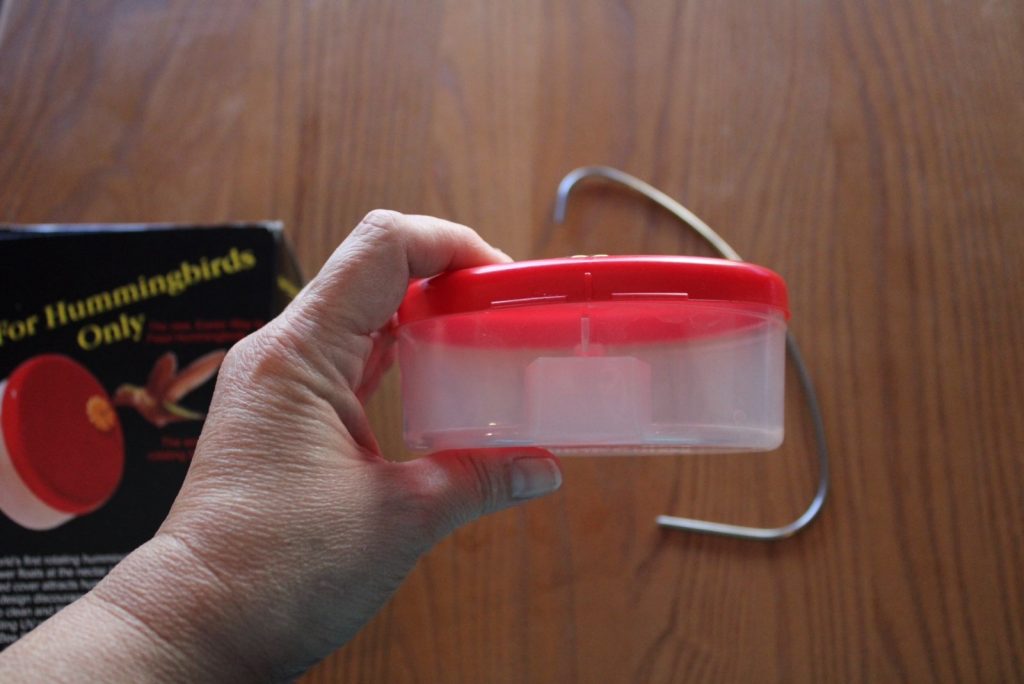
When you add it all up — easy cleaning, saucer-style nectar protection, pest resistance, the right color, and durable materials — you’re describing the For Hummingbirds Only spinning feeder. It keeps nectar below the ports (bee-proof), comes apart for quick cleaning, and uses a weight-activated spin that gently turns away woodpeckers and large birds while letting hummingbirds feed in peace. It also makes a thoughtful gift for the bird lover in your life.
Whatever you choose, prioritize the features above over price or novelty — your hummingbirds (and your weekends) will thank you.
Related Articles
- Top Questions Asked About Hummingbird Feeders
- Hummingbird-Safe Pest Control for Your Garden
- How to Attract Hummingbirds to Your Garden
Ready to skip the trial and error? Shop the For Hummingbirds Only spinning feeder — woodpecker-proof, bee-proof, and easy to clean.